

Video AI Agents
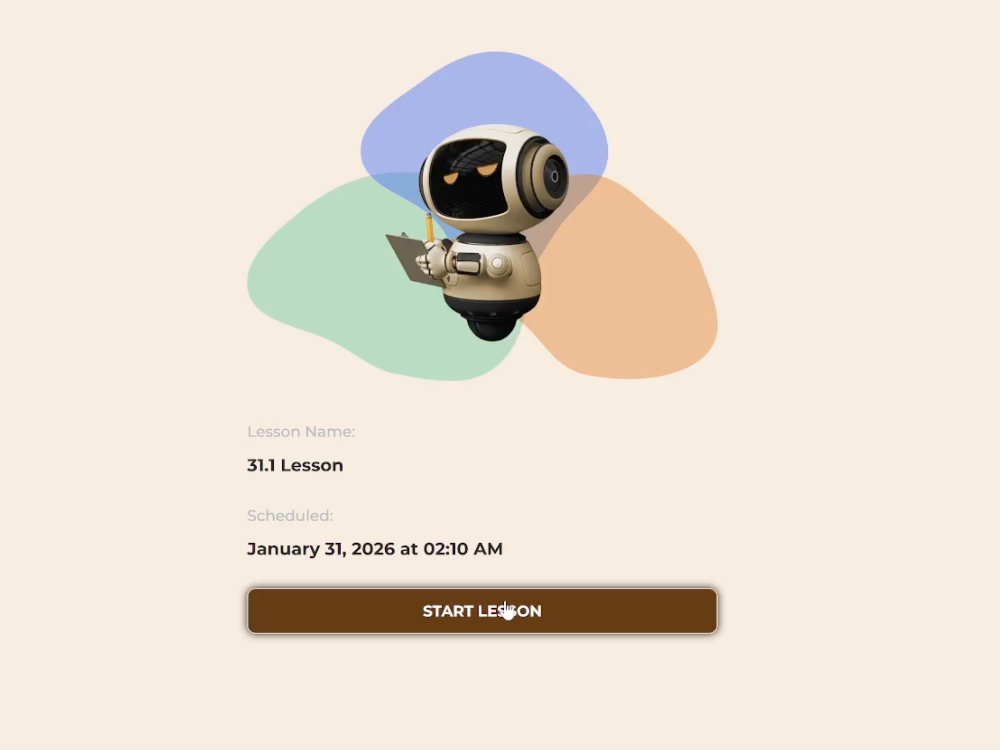
A video AI agent is a digital human that presents, teaches and sells on camera — a speaking face driven by an LLM, answering in real time. We have shipped two: a digital employee with a live speaking-face front end, and an animated 3D character that teaches children French.
The free 30-minute session looks at where a face on screen would carry your message further than text — onboarding, teaching, product demos, front-desk — and what it takes to build honestly. You keep the notes either way.
Where a talking screen beats a wall of text
Your best explainer cannot be everywhere
The founder demo converts; the sales engineer’s walkthrough closes deals; the star teacher’s lesson lands. Each exists once, in one language, on one calendar. A video agent gives that explanation on demand, and answers the follow-up question the recording never could.
Recorded video goes stale the week you ship it
Product videos, training modules and onboarding clips freeze the product at filming day. An avatar reads from the same source your docs do — when the product changes, the presenter changes with it, without a camera crew.
Text chat is invisible where attention is visual
On a kiosk, an exhibition stand, a kids’ learning app or a hotel lobby screen, nobody reads a chat window. A face that speaks holds attention long enough to help — engagement is the whole reason this category exists.
Teaching needs patience no schedule can afford
A child repeating French vocabulary for the tenth time needs a tutor who is delighted the tenth time too. The tutor exists because patience, repetition and consistency are exactly what software does better than a tired human.

A face that speaks holds attention text never gets.
What we build
Real-time conversational avatars
An animated character or photoreal digital human, lip-synced to generated speech, answering live from an LLM constrained to your content — not a canned video tree.
You get: the avatar, the voice, and the reasoning behind it, as one system.
The knowledge behind the face
The agent answers from your curriculum, product docs or scripts, with a written boundary for what it may claim and when it defers to a human.
You get: a content pipeline your team can update without touching the avatar.
The rendering pipeline that fits the surface
Unreal Engine characters for rich 3D scenes, lighter web-native avatars for browsers and kiosks — chosen for the device and latency budget, not for the demo.
You get: production rendering tuned for your actual devices and bandwidth.
Deployment where your audience is
Web, mobile, kiosk or exhibition stand, with analytics on sessions, comprehension checkpoints and drop-off.
You get: the agent live on your surface, with usage numbers from day one.
How it works
Define the role and the script boundary
What the agent presents, teaches or sells; what it may improvise; where it hands to a human. The character design starts here too.
Build the pipeline
Voice, lip-sync, rendering and the LLM behind them, wired to your content source and rehearsed against real scenarios.
Pilot on one surface
One course, one product line, one kiosk — measured on sessions, completions and the honest question: did it help?
Extend on the numbers
More content, more languages, more surfaces — each judged like the first.

Avatars are the interface layer of spatial computing. The pipelines we ship today — voice, lip-sync, real-time reasoning — are the ones headsets will assume tomorrow.
Proof, not claims
Two shipped systems, and the animation and vision work that makes them move.
A digital employee with a live speaking face
Precise algorithms, efficient token use, secure non-AI database integrations — and a face that talks to the user while the boundaries hold underneath.
Real-time face tracking under the hood
The computer-vision layer this category rests on — real-time facial landmark tracking we have built and shipped as its own project.
A digital human presents the same material a thousand times a day, in the same tone, on every timezone — and every session is a conversation, not a recording.
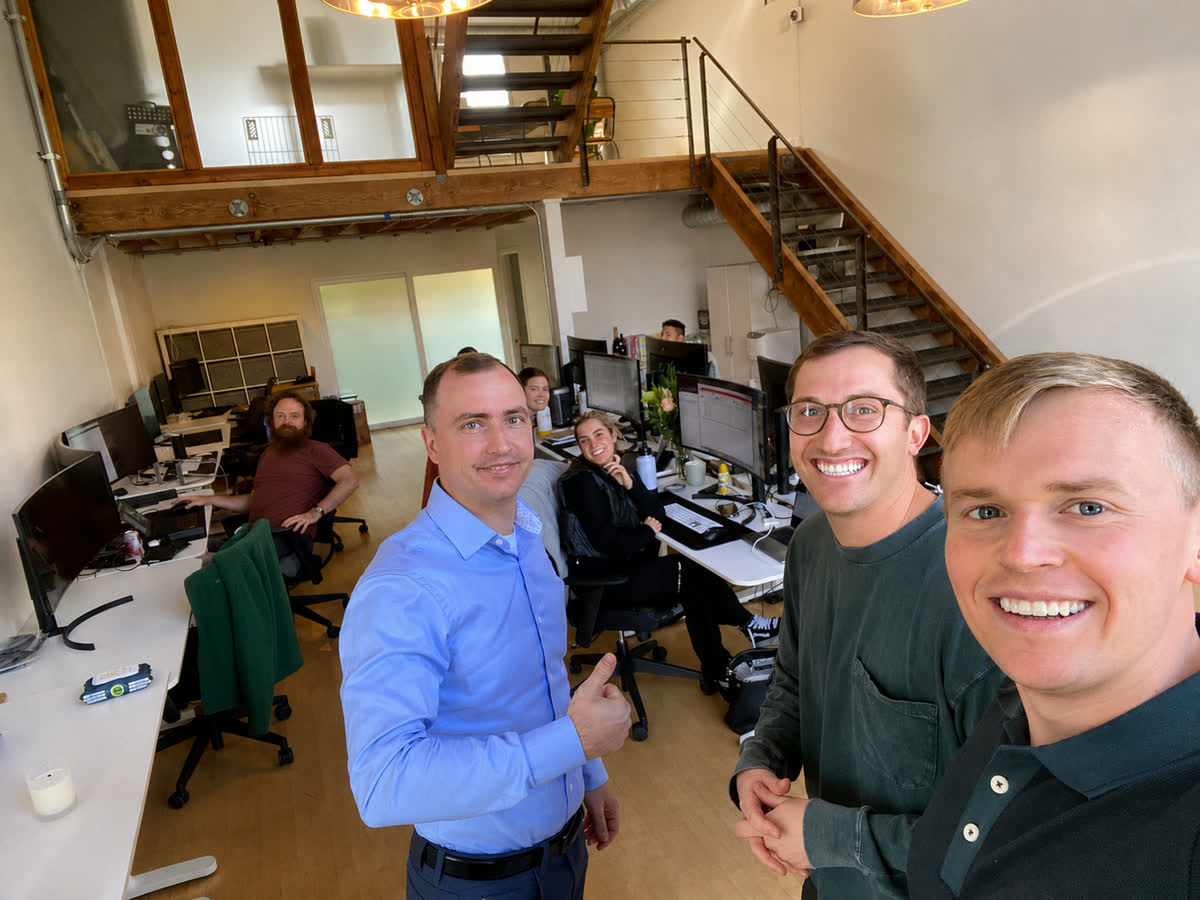
Digital humans fail on the details — gaze, timing, lip-sync under latency. We treat them as engineering constraints with budgets, not art direction.
Scope your digital human on a free session
One 30-minute session with an engineer defines the role, the surface and the honest build path — including whether a lighter voice or chat agent would serve the goal better. The build is then scoped in writing and priced before anything starts.
You keep the role definition and pipeline recommendation either way. Nobody follows up more than once.
Clients also buy
Voice AI Agents
Phone, support and sales calls answered 24/7 by a voice agent that knows your business and hands off cleanly.
3D, Animation & Computer Vision
Real-time 3D characters, animation and vision pipelines — medical avatars, face tracking, AR experiences.
Chatbots & RAG
Assistants that answer from YOUR knowledge base, with retrieval you can audit — and a clear line to agents when you need one.
We watch this category ship, stall and recover at close range — and build only the parts that survive contact with real users.
The questions buyers actually ask
Photoreal digital human or animated character — which should we pick?
It depends on the audience and the claim. Photoreal humans suit corporate presenting; a designed character like the tutor we built avoids the uncanny valley entirely, is loved by children, and survives style changes. We prototype both directions during scoping if the answer is not obvious.
Is it a real conversation or a canned video tree?
A real conversation: the avatar answers live from an LLM constrained to your content, with lip-synced generated speech. Canned trees are cheaper and sometimes the right call for pure compliance scripts — we say so when they are.
What stops it from saying something wrong on camera?
The same discipline as our other agents: a written content boundary, answers grounded in your source material, refusal-and-defer behaviour for out-of-scope questions, and full transcripts of every session for review.
What does the rendering run on?
Unreal Engine for rich 3D scenes and exhibition-grade visuals; lighter web-native rendering for browsers, mobile and kiosks. The choice is driven by your device fleet and latency budget, and we have shipped both.
Can it speak our languages?
Yes — the voice pipeline supports the major languages, and our anchor case is itself a language-teaching product. Voice quality per language is tested with your material before launch.
How long does a first version take?
A piloted first surface typically lands in six to nine weeks from kickoff, depending on character design and content volume. Scoping gives you a written schedule before anything is committed.
What AI can actually carry in your business — the one-page version
The nine AI & Agents services on one printable page: what each one is, the situation it answers, and the first engagement that proves it. Built to be forwarded to whoever holds the budget.
Put a face on your product
Book the free 30-minute session and we define the role, surface and pipeline for your digital human — or write two sentences about what it should present, teach or sell, and an engineer replies in one business day.
- 30 minutes, an engineer on the call
- You keep the written notes either way
- Nobody follows up more than once