

Code Review as a Service
A senior human engineer reviews every pull request before it reaches production — correctness, security, maintainability — as a monthly subscription. It is the human-verification layer for teams shipping at AI speed: the code arrives faster than ever; the judgment reading it should not be the part you cut.
The free 30-minute session looks at your repos, PR volume and current review reality, and says honestly which plan fits — or whether you need one at all. You keep the notes either way.

AI builds. Humans verify.
Audit & Human Oversight · The group promiseWhy review is the bottleneck that matters
AI multiplied the code; nobody multiplied the readers
The team ships five times the diff volume of two years ago, and the same two seniors are supposed to read it all. They skim, then approve, then the incident review finds the line everyone technically looked at.
The founders still review everything, badly
In many funded teams the review bar is a founder at midnight. It worked at three engineers; at ten it is a bottleneck, a burnout, and a single point of judgment failing quietly.
Approval theatre has replaced review
PRs approved in ninety seconds with a thumbs-up emoji. The ritual survives; the reading stopped. Everyone knows, nobody says it, and the codebase records the difference month by month.
Junior-heavy teams have nobody to learn from
Review is how engineering taste propagates. A team without seniors reviewing does not just miss bugs — it stops improving. Subscription review injects the standard and teaches it at once.
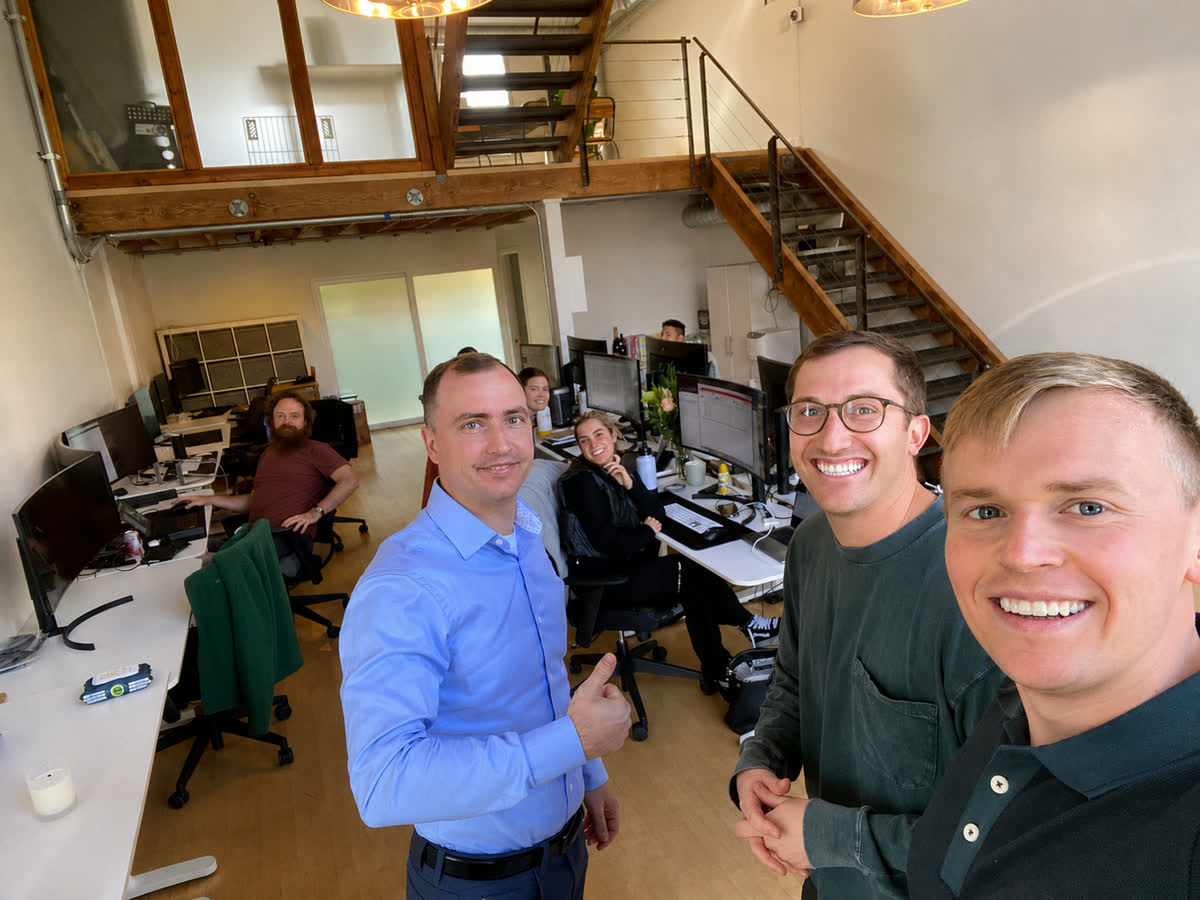
A review is only as good as the attention behind it. We sell the attention, with a name and an SLA attached.
What the subscription does
Every PR, read by a senior
Correctness, security, performance and maintainability — actual reading with written comments, on your repos, inside your existing PR flow.
You get: substantive review comments, not drive-by approvals.
A response-time promise
Reviews land within an agreed turnaround so the subscription accelerates delivery instead of gating it.
You get: review SLAs your delivery planning can rely on.
Standards that compound
Recurring findings become written conventions; conventions become CI checks and shared review checklists over time.
You get: a codebase whose quality trends up, measurably.
AI-output fluency
Reviewers who use AI tooling daily and know its failure signatures — the plausible-looking migration, the test that asserts nothing, the error path that swallows.
You get: the reading skill that AI-accelerated teams specifically need.
How it works
Repo and flow onboarding
Access, conventions, risk areas and the review depth per repo agreed in writing.
Reviews begin
Senior eyes on every PR within the agreed turnaround, comments in your PR tool.
Monthly quality readout
Findings, trends and the conventions worth writing down — a monthly note your technical leadership can act on.
Standards hardening
Checklists and CI checks accrete from real findings, raising the floor under every future PR.

Review is how engineering taste spreads through a team. Subscription review injects a senior standard and teaches it PR by PR.
Proof, not claims
The review bench is the team fintechs trust with verification itself.
Handed a neobank’s verification layer
A neobank outsourced automated end-to-end coverage of its core journeys to us — the same verify-other-people’s-work trust a review subscription runs on.
Review by a checkable standard
Ten years, 200+ clients, 100% Job Success on Upwork — the seniors reading your PRs hold a public record.
Every pull request read by a senior human before production — the single practice that catches what generators, linters and tired teammates all miss.
“Clean code, clear documentation, great communication and able to work well with a minimal brief and a constantly changing UX design.”

Merged unread is a risk category.
Three shapes of the subscription
Solo
One repository, every PR reviewed by a senior engineer within the agreed turnaround. The right size for a single product with a small team.
Team
Several repositories, a tighter SLA, and the monthly quality readout — the standard shape for a 5–20 engineer company shipping daily.
Scale
Organisation-wide review with security-focused passes on sensitive repos and conventions work across teams.
The monthly number depends on PR volume and review depth, and is stated in writing after the free session — then revisited openly as your volume changes. Reviews happen in your tools; the record is yours.
If the question is “how bad is it today?” rather than “who reads tomorrow’s PRs?”, begin with the Code & Developer Audit — $1,900 fixed: three days of senior review of the codebase and the team behind it, in writing. Many subscriptions start there, with the audit’s findings becoming the review checklist.
Clients also buy
Code & Developer Audit
An independent human audit of the code — and of the team or vendor that produced it. Fixed price, in writing.
QA & Test Automation
Human exploratory and release QA plus automated regression in CI/CD — two disciplines, one service.
Staff Augmentation
Senior engineers embedded in your team, on your repos and your process — productive in the first week.
The group promise, applied continuously: generation accelerates, and a human reads before production. Every time.
The questions buyers actually ask
Does every single PR really get a human read?
Yes — that is the product. Depth is tiered by risk (a dependency bump reads differently from an auth change), but nothing merges unread. The turnaround SLA is agreed per plan so the reading never becomes the bottleneck.
How fast are reviews returned?
Within the SLA agreed at onboarding — sized to your cadence and time zones. EU hours with a full US-morning overlap mean most US-team PRs opened during the day are reviewed by the next morning at the latest.
Will reviewers understand our codebase?
Onboarding is a real phase: architecture, conventions and risk areas documented before the first review, and the same reviewers stay on your account so context compounds instead of resetting.
How is this different from AI review tools?
We use analysis tooling too — and then a senior human reads, which is the part tools cannot replace: architectural judgment, security intuition, the question "should this change exist at all?". For AI-generated code especially, the failure modes are precisely the plausible-looking ones tools pass.
Can you review AI-generated code specifically?
It is the subscription’s sharpest use case: teams generating code at speed need a human verification layer that knows generation’s failure signatures. Our reviewers work with these tools daily — fluency in reading what they produce is the service.
What does it cost?
A monthly number stated in writing after the free scoping session, driven by PR volume and depth — and revisited openly as you grow. No per-seat games; the unit is the reading, not the headcount.
Independent human verification — the one-page version
The five Audit & Human Oversight services on one printable page: what each verifies, what the written output is, and where to start. Built to be forwarded to whoever holds the budget.
Put a senior between the diff and production
Book the free 30-minute session on your repos and PR volume — or describe your review reality in two sentences and an engineer replies in one business day.
- 30 minutes, an engineer on the call
- You keep the written notes either way
- Nobody follows up more than once