

E-commerce Development
Development & optimization of running stores. Fluvius is an ecommerce development company for stores that are already trading: page speed and Core Web Vitals, checkout and payment integrations, ERP, CRM and fulfilment wiring, migrations and conversion work — engineered by seniors from a company that has served 200+ clients across ten years.
Not sure where your store leaks revenue? Start with the free 30-minute session: we look at speed, checkout and the data flows behind your orders, and tell you honestly what is worth engineering first. You keep the notes either way.
Where running stores call us in
A live store is a different engineering problem from a new build: every change happens while customers are paying. These are the projects we keep being handed.
The store is live, and every change touches revenue
Deploys happen while customers are mid-checkout, so the previous approach — ship and hope — has become too expensive. What a trading store needs is engineering process: staged releases, tests around the money paths, and rollbacks that take minutes. That discipline is the product we sell.
Speed decides rankings and conversion at the same time
Core Web Vitals now sit inside both the Google ranking and the buyer’s patience. A storefront that scores poorly pays twice: less traffic in, fewer orders out. Most stores we audit carry seconds of avoidable weight — unoptimized media, third-party scripts, render-blocking themes — and the fixes are measurable within a release cycle.
Checkout is where engineering pays back fastest
Every extra field, slow payment call or silent decline is margin leaking at the last step. Payment providers change APIs, fraud rules tighten, wallets and local methods multiply — checkout deserves an owner, and in most stores nobody owns it end to end.
The back office grew faster than the integrations
Orders re-typed into the ERP, stock reconciled in spreadsheets, fulfilment updated by hand. The storefront looks modern while the systems behind it are stitched together manually. Wiring commerce, ERP, CRM and fulfilment into one flow is where hours and errors disappear — usually with better ROI than any redesign.
Retail-scale UX work, delivered on time and on budget — Westfield’s words, in a verified review.
What we develop and optimize
The systems behind the storefront — the parts a theme cannot fix. Each engagement is scoped around measurable numbers: load time, conversion, order-handling hours.
Speed & Core Web Vitals
Profiling the real store under real traffic, then engineering the fixes: image and asset pipelines, script diets, caching and CDN strategy, server response times. Budgets go into CI so the store stays fast after we leave, release after release.
You get: measured Core Web Vitals improvements, enforced by budgets in CI.
Checkout & payment integrations
We build and maintain payment paths on Stripe, PayPal, ChargeBee and Clover — cards, wallets, subscriptions and point-of-sale — with the retry logic, decline handling and reconciliation that keep finance and customers on the same page.
You get: a checkout that is faster, tested, and accountable for every payment.
ERP, CRM & fulfilment integrations
Orders, stock, customers and shipping events flowing between the store and the systems that run the business — without re-typing. We wire the APIs, handle the edge cases (partial shipments, refunds, cancellations) and log every hop so support can answer any “where is my order” in one lookup.
You get: one connected order flow from storefront to warehouse to books.
Migrations & replatforming
Moving a trading store — platform to platform, monolith to headless, or onto a custom React/Next.js storefront — with URLs, SEO equity, customer accounts and order history preserved. Staged, reversible, and rehearsed before the real cutover.
You get: a migration plan where the store keeps trading through every stage.
Conversion optimization, engineered
CRO grounded in analytics and session data rather than opinion: hypotheses, A/B experiments, and the front-end engineering to run them cleanly. Speed work and checkout work feed directly into this — the three compound.
You get: an experiment pipeline with results you can read in revenue.
Ongoing development
Most store owners keep us on after the first project: a senior team that already knows the codebase, shipping features, integrations and seasonal campaigns on a steady cadence. Many Fluvius clients have stayed 7+ years straight.
You get: a standing engineering team that knows your store.
How an engagement runs
Paced for a store that cannot stop trading: measure first, ship in small reversible steps, verify in the numbers.
Store audit
We measure the store as it runs today — Core Web Vitals under real traffic, checkout funnel step by step, the integration map behind the orders. Everything gets a number, because the plan is only as good as the baseline.
The prioritized plan
A written plan ordered by revenue impact per engineering hour: what to fix first, what it costs, what number it moves. You can hand it to any team — the test of an honest audit.
Ship in small, reversible releases
Changes land behind flags and staged rollouts, with tests around the money paths and rollback rehearsed. The store keeps trading through every deploy; finance never finds out about a release from a reconciliation error.
Measure, then compound
Every release is verified against the baseline — speed, conversion, order-handling hours — and the next priorities are re-ranked on real results. This loop is what turns a fix into a faster-growing store.

The best measure of e-commerce work is whether the client keeps you through the next season, and the one after. Many Fluvius clients have stayed 7+ years straight — long enough that we wear their merch.
Proof, not claims
We run this work daily on stores that are trading right now — among them letsgoleisure.com, a running e-commerce store we develop and optimize — and on the commerce platforms below, built and maintained by the same team.
Pay-&-book commerce for local business
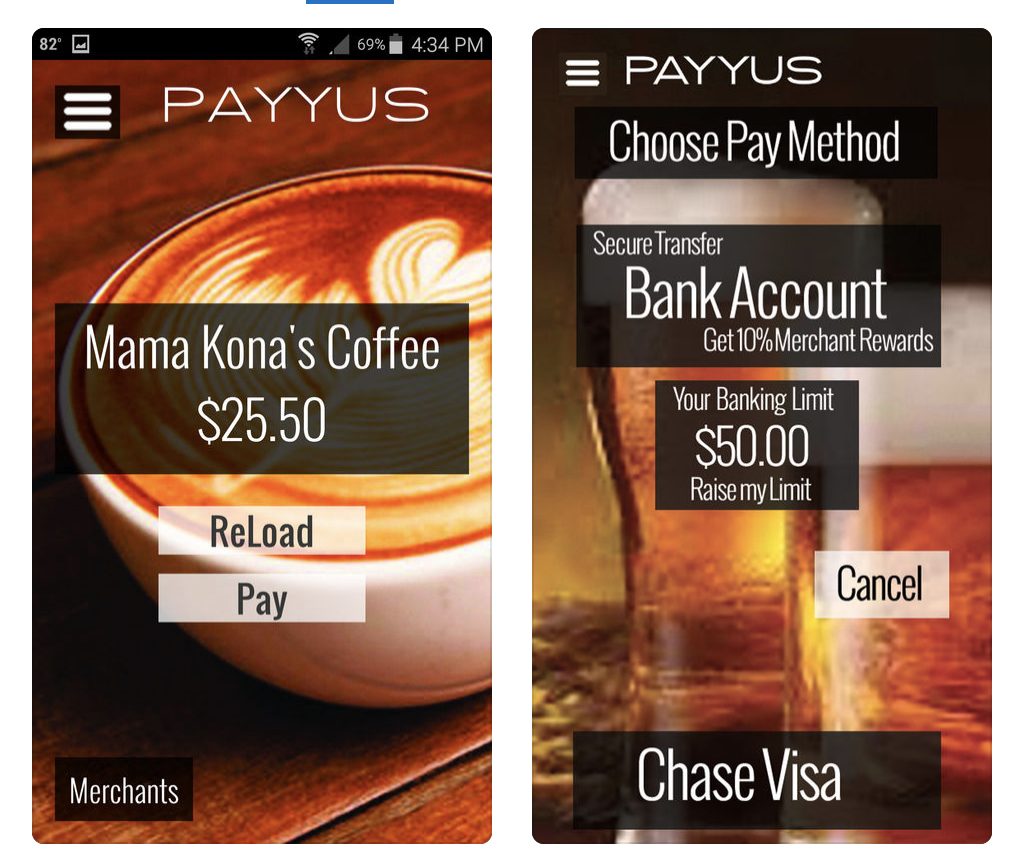
A payments-and-booking platform for restaurants, salons and services — pay and reserve in advance, on the phone or on Clover POS. Checkout, payment integration and the operational back end, built by Fluvius end to end.
Micro-donations at browser scale
A donation platform and Chrome extension funding quality journalism from outlets like The Guardian and The New York Times. High-frequency small payments, wired to be reliable and reconcilable — the same engineering that keeps a checkout honest.
Many Fluvius clients have stayed 7+ years straight — store owners keep the engineers who keep their checkout fast and their orders flowing.
Themes and plugins get a store to launch. Speed budgets, tested checkouts and wired-in back offices are what get it to scale — that is the layer we build.
The engagement starts with a store audit
Thirty minutes with an engineer on your actual store: where the speed goes, where checkout leaks, which integrations would save the most hours. If the honest answer is that your store is already well engineered, you will hear that too — and keep the notes either way.
A working session with an engineer who ships e-commerce weekly — not a sales call. You leave with the three highest-impact fixes for your store, whoever ends up building them.
Clients also buy
API Integrations
Payments, CRM, fulfilment — anything with an API, wired in so it stays wired in. Stripe, PayPal, ChargeBee, Clover.
UI/UX & Product Design
Design systems and conversion-focused product design for the AI era — interfaces engineers can build from.
QA & Test Automation
Human exploratory and release QA plus automated regression in CI/CD — two disciplines, one service.
Every store engagement is scoped around numbers an owner already watches: load time, conversion, order-handling hours. If a piece of work cannot move one of those, we say so before you pay for it.
The questions buyers actually ask
Do you work with our existing platform or only custom builds?
Both. Most engagements start on the platform you already trade on — we optimize speed, checkout and integrations in place. Custom and headless storefronts on React, Next.js and Node.js come in when the platform itself is the ceiling, and the audit tells you honestly which case yours is.
Which payment providers do you integrate?
Stripe, PayPal, ChargeBee and Clover are the ones we build with regularly — cards, wallets, subscriptions and point-of-sale — and anything else with an API can be wired in. The engineering that matters is the same everywhere: retries, decline handling, webhooks that never miss, and reconciliation your finance person can trust.
Can you improve our Core Web Vitals without a redesign?
Usually, yes. Most of the weight in a slow store is engineering, not design: unoptimized images, third-party scripts, render-blocking assets, slow server responses. We fix those first, measure the result, and put budgets into CI so the scores hold. A redesign is a separate decision, made on conversion data.
How do you make changes to a store that is trading every day?
In small, reversible releases: feature flags, staged rollouts, automated tests around checkout and payments, and rollback rehearsed before it is ever needed. The store keeps selling through every deploy — that constraint shapes everything about how we work.
Can you take over a store another agency built?
Yes — takeovers are routine for us. We audit what exists, put tests around the revenue paths first, and then improve from a stable base. Many Fluvius clients arrived exactly this way and have stayed 7+ years straight.
What does an engagement cost?
It depends on scope, which is why everything starts with the free 30-minute audit and ends in a written, prioritized plan with costs attached. You see the numbers before committing to anything, and the plan is yours whichever team builds it.
Seven ways to get software built well — the one-page version
The Build & Design services on one printable page: what each covers, when it is the right door, and what the first deliverable looks like. Built to be forwarded to whoever holds the budget.
Your store, faster and better wired
Book the free 30-minute session and we will look at your store’s speed, checkout and order flows together — an engineer, not a salesperson. Or write two sentences about your store and get a reply within one business day.
- 30 minutes, an engineer on the call
- You keep the written notes either way
- Nobody follows up more than once