

Product Rescue
A stalled or vibe-coded build, made production-grade. We take over where a vendor, a departed developer or an AI-generated prototype stopped — read the code ourselves, put the findings in writing, then make it work at scale. The capability proof: a 14-year-old legacy backend rewritten to Node.js in 6 months, against typical two-year quotes.
The free 30-minute session is a triage call: what you have, how bad it actually is, and what the honest options are. You keep the assessment either way.
The four rescues we keep being called for
The vendor went quiet with your money and your code
Invoices paid, milestones missed, replies slower each week. You need two things fast: possession — repos, credentials, infrastructure in your name — and an independent read on what the code is actually worth. Both are day-one work in a rescue.
The AI-generated prototype met real users
It demoed beautifully. Under real users it loses data, leaks sessions and falls over at modest load — because prototypes generated at speed skip the parts that do not demo: error handling, migrations, security, tests. We keep what works and rebuild the load-bearing walls.
The one developer who understood it is gone
A capable person carried the product for years, then left — with the deploy process, the schema decisions and the tribal knowledge. The code still runs; nobody dares touch it. A rescue here is archaeology first: document, test, then change.
Every release breaks something else
The product earns revenue, and each deploy is a coin flip. No tests, no staging, entangled modules. The fix is unglamorous and proven: pin current behaviour with tests, untangle the worst seams, restore a release cadence you can trust.
Every rescue starts by reading the code, not the pitch.
How a rescue works
Possession and triage first
Repos, credentials, cloud accounts and domains secured in your name; then a senior engineer reads the code and writes down what is salvageable, what is dangerous, and what it costs to fix — with evidence, not vibes.
You get: a written triage report you could hand to any team, including your board.
Stabilise before improving
Tests pin the behaviour that must not change; CI/CD replaces the deploy ritual; monitoring replaces surprises. Only then do features restart.
You get: a release process you can run weekly without fear.
Rebuild the load-bearing walls
The modules that cannot carry production load are rebuilt behind stable interfaces — incrementally, with the product live the whole time. The 14-year Go-to-Node rewrite ran exactly this way.
You get: the risky parts replaced without a big-bang rewrite.
A team that stays accountable
The same engineers who triaged your code carry it forward — no handoff between an audit team and a delivery team, no account-manager layer.
You get: named senior engineers, direct in your Slack.
How it works
Triage
Code, infrastructure and delivery history read by a senior engineer; findings and options in writing.
Stabilise
Possession, tests on critical paths, CI/CD, monitoring. The bleeding stops before the surgery starts.
Rebuild and restart delivery
Load-bearing rebuilds and the feature roadmap resume together, in weekly increments with demos.
Hand back or carry on
Documented handover to your team, or ongoing development on a monthly model — your call, made without pressure.
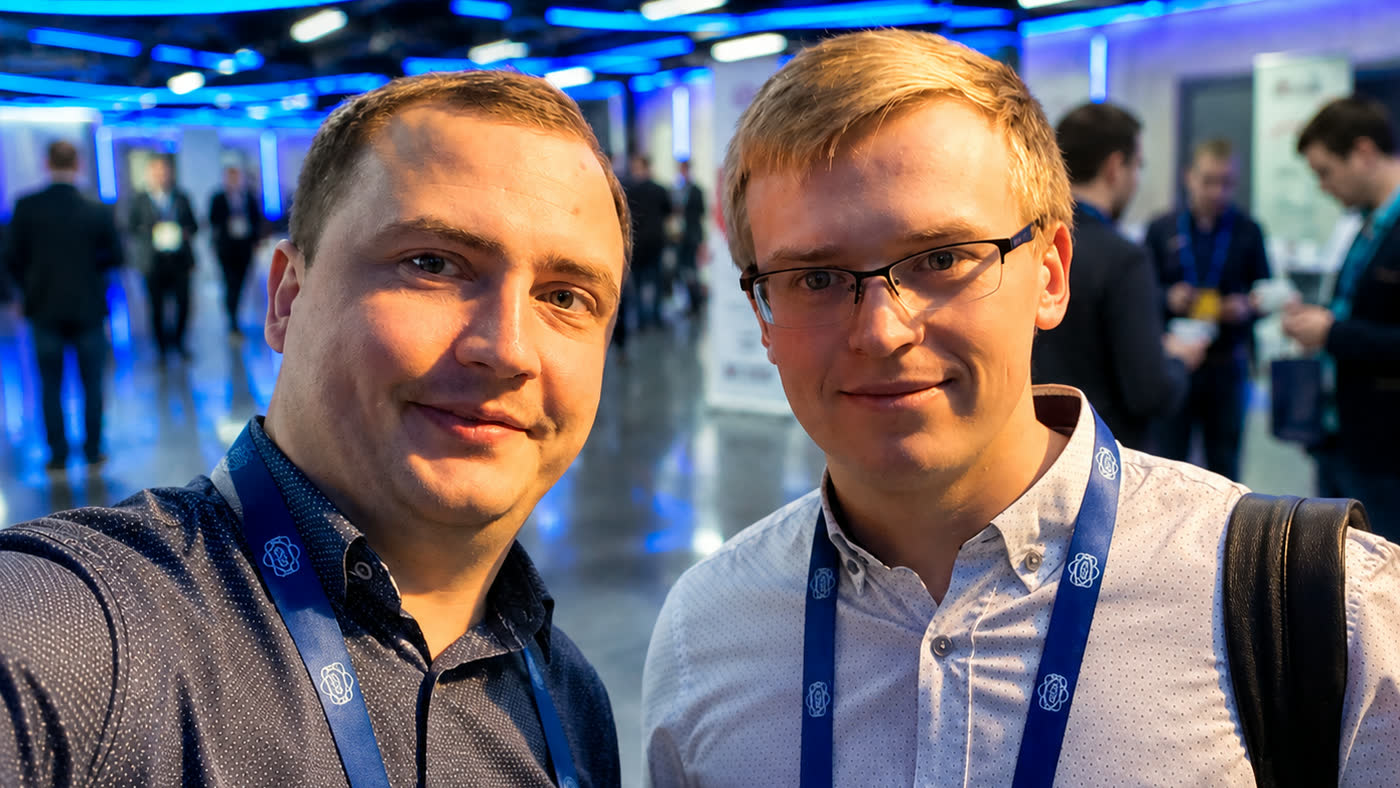
A rescue needs a name attached. Ours has two founders who read diffs — and a record where every taken-over product either shipped or was honestly triaged out.
Proof, not claims
Rescue is proven by what happens after: products that stay in production for years, and clients who stay with them.
A 14-year backend, rewritten in 6 months
One senior engineer, AI-assisted, rewrote a 14-year-old Go backend to Node.js in six months — against typical quotes of around two years — while the system stayed in service. The clearest proof of what senior-plus-AI-tooling means in a take-over.
Taken on, then kept production-grade for years
A trading-education platform whose operational surface we develop and run — the after-picture of a successful take-over: releases on cadence, a client relationship measured in years.
Clients who arrive in trouble, stay for years
Many of our longest client relationships — 7+ years straight — began with inherited code and a stalled roadmap. The 100% Job Success record on Upwork is checkable.
One rescue at a time: each take-over gets the senior attention it needs, which is why the next start date on this page is real.
“Had a really pleasant experience working with George. He helped me develop a tricky project and although we went a little over schedule, he was always extremely communicative and on the ball at all times. I’d definitely recommend George and his team for anyone thinking of hiring him and will certainly use him in the future for projects.”

The best rescues become boring: weekly releases, no surprises, a client who stops thinking about the codebase and starts thinking about the product again.
One rescue at a time — hold the next start
The next rescue slot
Rescues get one senior track at a time, because a take-over deserves undivided attention in its first weeks. The date below is the next real start; a refundable deposit holds it while triage is scheduled.
- Triage report in writing within the first two weeks
- Possession checklist: repos, credentials, infrastructure in your name
- Stabilisation plan with a priced, dated scope
- The same senior engineers from triage through delivery
A refundable deposit holds the date shown. If we ever slip your held date, the deposit comes back doubled.
The call confirms the situation and the date. The deposit is only asked for once scope and date are in writing.
Clients also buy
Code & Developer Audit
An independent human audit of the code — and of the team or vendor that produced it. Fixed price, in writing.
AI Code Cleanup & Cloud Cost Optimization
AI-generated code refactored by senior engineers — leaner RAM, lighter DB load, a smaller cloud bill.
Product Engineering Team
A smaller senior team that ships the same roadmap — AI-tooled engineers at roughly 40% less than the in-house math.
Prototype speed is cheap now; production judgment is not. Rescue is the business of adding the second to the first.
The questions buyers actually ask
How bad does a project have to be for a rescue?
The threshold is simpler than people expect: you cannot ship changes with confidence, and you no longer trust the people or the process that got you here. Whether the code is 20% salvageable or 80% is what triage establishes — in writing, before bigger decisions.
Will you tell us to rewrite everything?
Almost never — full rewrites are how rescues fail. The default is: pin behaviour with tests, stabilise delivery, rebuild only the load-bearing walls that cannot carry production. When a rewrite genuinely is cheaper, the triage report says so with numbers.
Our previous vendor still holds the repos and credentials. Can you help?
Yes — possession is step one, and we have walked clients through it many times: access inventories, transfer requests, and rebuilding what cannot be recovered. The sooner this starts, the cheaper it is.
Can you rescue AI-generated codebases?
It is one of the most common cases now, and we are unusually well placed: engineers who use AI tooling daily and know exactly which corners generated code cuts. We keep what works and rebuild what was never really built.
What does the deposit do?
It holds the start date shown on this page against other buyers — one rescue track is sold at a time. It is refundable, and if we slip a held date, it comes back doubled. The date on screen when you submit is stamped into your record.
What happens after the product is stable?
Your choice, made without pressure: a documented handover to your own team, or the same engineers continuing on a monthly model. Many clients keep the team — the longest such relationships are past seven years.
Reading first: from AI-generated prototype to production software — the twelve areas production adds, and the order we add them in.
Seven ways to get software built well — the one-page version
The Build & Design services on one printable page: what each covers, when it is the right door, and what the first deliverable looks like. Built to be forwarded to whoever holds the budget.
Triage first. Decisions after.
Book the triage call and get an honest read on what you have — or describe the situation in two sentences and an engineer replies in one business day, discreetly.
- 30 minutes, an engineer on the call
- You keep the written notes either way
- Nobody follows up more than once