

Staff Augmentation
Senior Fluvius engineers embedded in your team — your repos, your standups, your review process — productive in the first week, not the first quarter. The bar is set by the record: 100% Job Success on Upwork across ten years, and engineers a UAE retail bank embedded on-site inside its own build.
The free 30-minute session maps the gap in your team — discipline, seniority, duration — and tells you honestly whether augmentation or a managed team fits better. You keep the notes either way.
The gaps augmentation actually closes
The roadmap is committed; the seat is empty
A lead left, a launch is dated, and the hiring pipeline says three months of interviews before a start date. An embedded senior engineer starts in days and holds the line while you hire properly — or becomes the long-term answer.
One discipline is missing, not one team
You have engineers; you lack the DevOps depth for the migration, the mobile specialist for the release, the backend senior for the scaling work. Augmentation adds exactly that discipline, inside your process, without restructuring anything.
Freelance roulette burned the last two quarters
Marketplace hires arrived confident and left chaos: no reviews, no tests, no handover. Our engineers come from one bench with one discipline behind them — and the 100% Job Success record exists because that discipline holds on other people’s repos too.
Vendors keep pitching teams when you need people
You run the process; you need contributors, not a parallel organisation with its own manager. Augmentation is exactly that: your process, your priorities, our seniors inside them.

Your process, our seniors inside it.
What embedded looks like
Senior engineers in your workflow
Backend, frontend, mobile, DevOps or QA — inside your repos, your tickets, your reviews, your standups. No account-manager layer between you and them.
You get: named senior engineers, direct in your Slack, from week one.
Productive in the first week
Seniors onboard themselves: they read the codebase, ask precise questions, and ship a first reviewed change fast. Week-one output is a stated expectation, not a hope.
You get: a first merged, reviewed contribution inside week one.
Your standards, verifiably met
Your definition of done, your review bar, your security rules — followed and reinforced. Where you want it, our engineers raise the bar: tests where there were none, reviews with substance.
You get: contributions that pass your own audit, not just ours.
Flexible duration, honest exits
Cover a gap for a quarter or hold a seat for years. Handover documentation is standard, so ending is as clean as starting.
You get: capacity that flexes with your reality, in writing.
Claude Code (Max plan) plus a disciplined plugin stack: Spec Kit for spec-driven development, Code Review & PR Review Toolkit, Security Guidance, Playwright, Context7, LSP plugins, Superpowers, and CLAUDE.md project memory. The current model in the stack is the latest Claude model. Not just faster — verifiably better: every change is spec’d, reviewed, security-checked and tested before it reaches you.
How it works
Define the seat
Discipline, seniority, duration, and what week-one output looks like — agreed in writing.
Meet the engineer
You interview the actual person who would join — not a profile, not a bait-and-switch.
Embed and deliver
Your onboarding, your repos, first reviewed change inside week one, cadence from week two.
Review and flex
Monthly check on fit and load; scale, extend or wind down with notice — handover docs included.
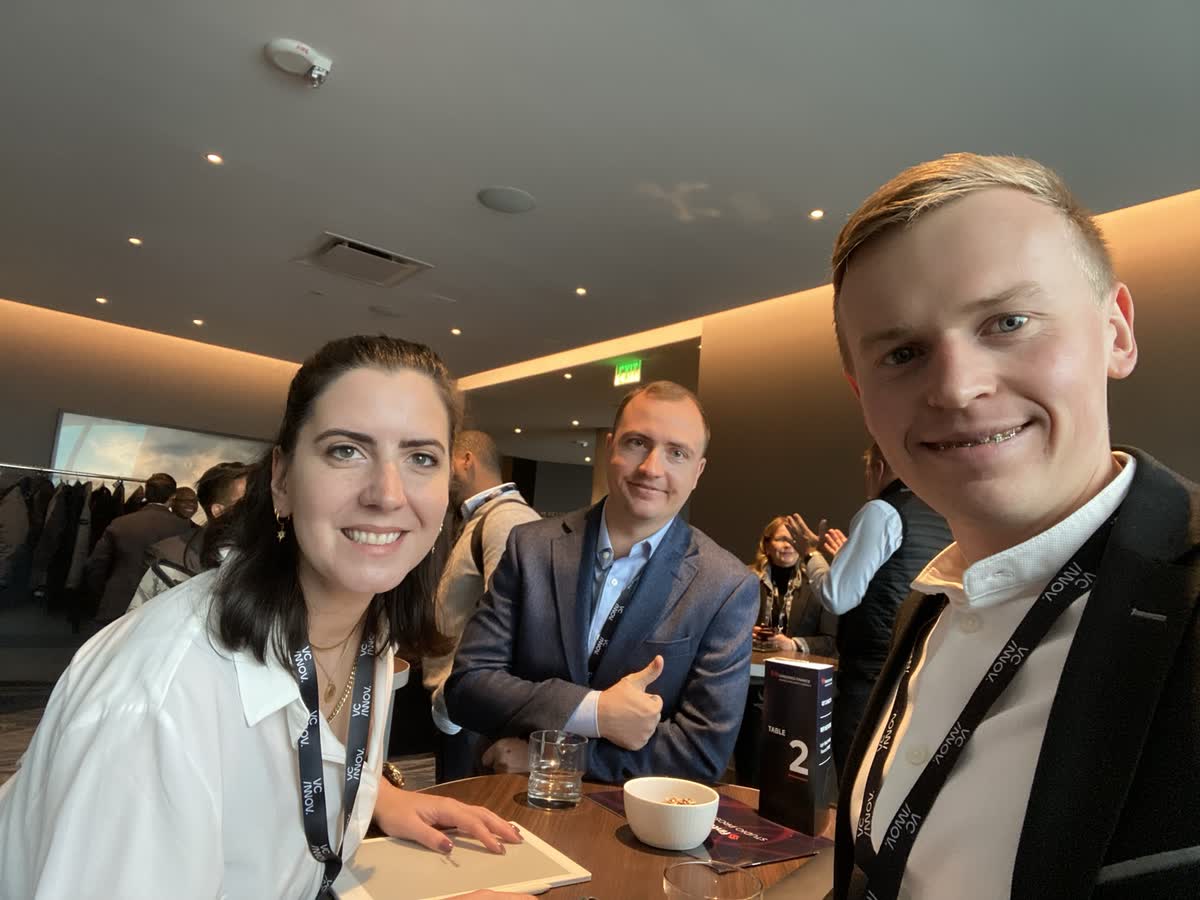
You interview the engineer who will actually join. The person you meet is the person who commits code — that rule is absolute.
Proof, not claims
Embedded work is the most checkable thing we do: it happens inside other people’s repos, under their review bar.
Embedded inside a retail bank’s own build
Fluvius engineers worked on-site in the bank, on its repos and release path, building its digital onboarding. Banks do not grant that access casually; this one did.
A checkable embedded track record
100% Job Success on Upwork across ten years of contracts — most of them exactly this shape: our engineers, other people’s codebases, their definition of done.
The deepest reference for embedded work: a UAE retail bank put Fluvius engineers on-site, inside its own repos and release path, to build its digital onboarding.
“…was a good addition to the team. We would work with Fluvius again on other briefs.”

Seniors onboard themselves: read the codebase, ask precise questions, ship a reviewed change. We put that in writing as a week-one expectation.
Senior seats are finite — hold the next start
The next embedded start
We embed engineers we would put on our own hardest work, so starts are scheduled against real senior capacity. The date below is the next one; a refundable deposit holds it while the seat is defined.
- Seat definition in writing: discipline, seniority, week-one output
- Interview with the actual engineer before any commitment
- First reviewed contribution inside week one
- Monthly fit review and clean-exit handover as standard
A refundable deposit holds the date shown. If we ever slip your held date, the deposit comes back doubled.
The call defines the seat and confirms the date. The deposit is only asked for after both are in writing.
Clients also buy
Product Engineering Team
A smaller senior team that ships the same roadmap — AI-tooled engineers at roughly 40% less than the in-house math.
Code Review as a Service
A senior human engineer on every pull request, as a monthly subscription — before it reaches production.
Legacy Modernization
Staged, AI-accelerated, behaviour-preserving modernization — with senior architectural oversight on every step.
EU hours, US-morning overlap: reviews and pairing in shared hours, a written handoff waiting when your day starts.
The questions buyers actually ask
How fast can an engineer actually start?
The queue date on this page is the honest answer for the next new seat. Once a start is held, the seat is defined and the interview happens the same week — the engineer arrives with a week-one output expectation in writing.
Do we get to choose the person?
Yes — you interview the actual engineer who would join, and you can decline. Bait-and-switch staffing is the industry disease this model is designed against; the person you meet is the person who commits code.
How do your engineers work?
With a disciplined, verifiable toolchain — detailed in the block above. In your team they follow your process; where you want more, they bring ours: specs before code, structured review, security checks and tests on every change.
Whose process wins — ours or yours?
Yours. Augmentation means your repos, your tickets, your review bar, your definition of done. Our engineers reinforce your standards and quietly raise them where you ask — they never run a parallel process.
What about time zones and communication?
EU business hours with a full US-morning overlap, so your morning starts with a written handoff and shared hours for pairing and reviews. Communication is direct — the engineer is in your Slack, no relay layer.
Augmentation or a managed team — which do we need?
Augmentation when you run the process and need contributors; a managed Product Engineering Team when you want the roadmap carried for you, management included. The free session answers this honestly for your case — sometimes the answer is the cheaper one.
Reading first: fixed price or time and materials — which structure suits which kind of work.
Team, scale and run — the one-page version
The seven Teams & Scale services on one printable page: what each covers, when it is the right door, and how the first month works. Built to be forwarded to whoever holds the budget.
The seat, filled by someone senior
Book the free 30-minute session to define the gap — or describe the seat in two sentences and an engineer replies in one business day.
- 30 minutes, an engineer on the call
- You keep the written notes either way
- Nobody follows up more than once