

3D, Animation & Computer Vision
Real-time 3D characters, animation pipelines and computer vision that ships — from medical avatars to face tracking running live in the browser. Six delivered projects stand behind this page, including Medical 3D Avatars, an animated 3D tutor, and real-time face tracking built on OpenCV and MediaPipe.
The free 30-minute session looks at your idea against what current vision and rendering pipelines honestly deliver on real devices. You keep the assessment either way.
Projects that need this exact intersection
The idea needs vision, 3D and product engineering at once
A camera feed, a recognition model, a rendered response, a product around it — four disciplines, usually four vendors, one seam-ridden result. The projects on this page shipped because one team owned the whole loop.
The demo ran on a workstation; users have phones
Vision and 3D demos love lab conditions. Production means mid-range Android, bad lighting, shaky hands and battery budgets. We build against device reality from week one — it changes every architectural decision.
Accuracy claims meet the real world
A model that tracks faces at 99% in the benchmark meets glasses, beards, masks and side light. Shipping vision means honest evaluation sets built from your real conditions, with the failure modes measured, not hoped away.
The character looks great and moves wrong
Motion is where 3D characters live or die — timing, weight, gaze, lip-sync under latency. Our animation work runs from Unreal Engine characters to web-native rigs, treated as engineering with budgets, not just art.
We track capture, rendering and vision as they industrialise — and ship the parts that are ready for production budgets.
What we build
Real-time 3D characters and scenes
Unreal Engine and web-native rendering for characters that converse, present and teach — our animated AI tutor is the shipped anchor.
You get: a character pipeline from design through rigging to live rendering.
Computer vision in production
Face tracking, recognition, object detection and measurement on OpenCV, MediaPipe and modern models — tuned for your devices and lighting, with honest evaluation sets.
You get: vision features with measured accuracy on your real conditions.
AR experiences
Camera-anchored content on mobile — we shipped the AR experience inside a US social-media SaaS and a brain-to-AR-glasses prototype with EMOTIV hardware.
You get: AR that survives real rooms, not just demo tables.
The product around the pipeline
Backends, APIs, apps and analytics — vision and 3D are features of a product, and we build the product too.
You get: one accountable team from model weights to app store.
How it works
Feasibility against reality
Your idea tested on paper against devices, lighting, latency and accuracy requirements — with a prototype plan for the riskiest assumption.
Prototype the risk
The one thing most likely to kill the project gets built first and measured on real devices.
Build the pipeline
Models, rendering, product integration — developed against your evaluation set, demoed weekly.
Ship and tune
Production launch, then accuracy and performance tuning on live data.
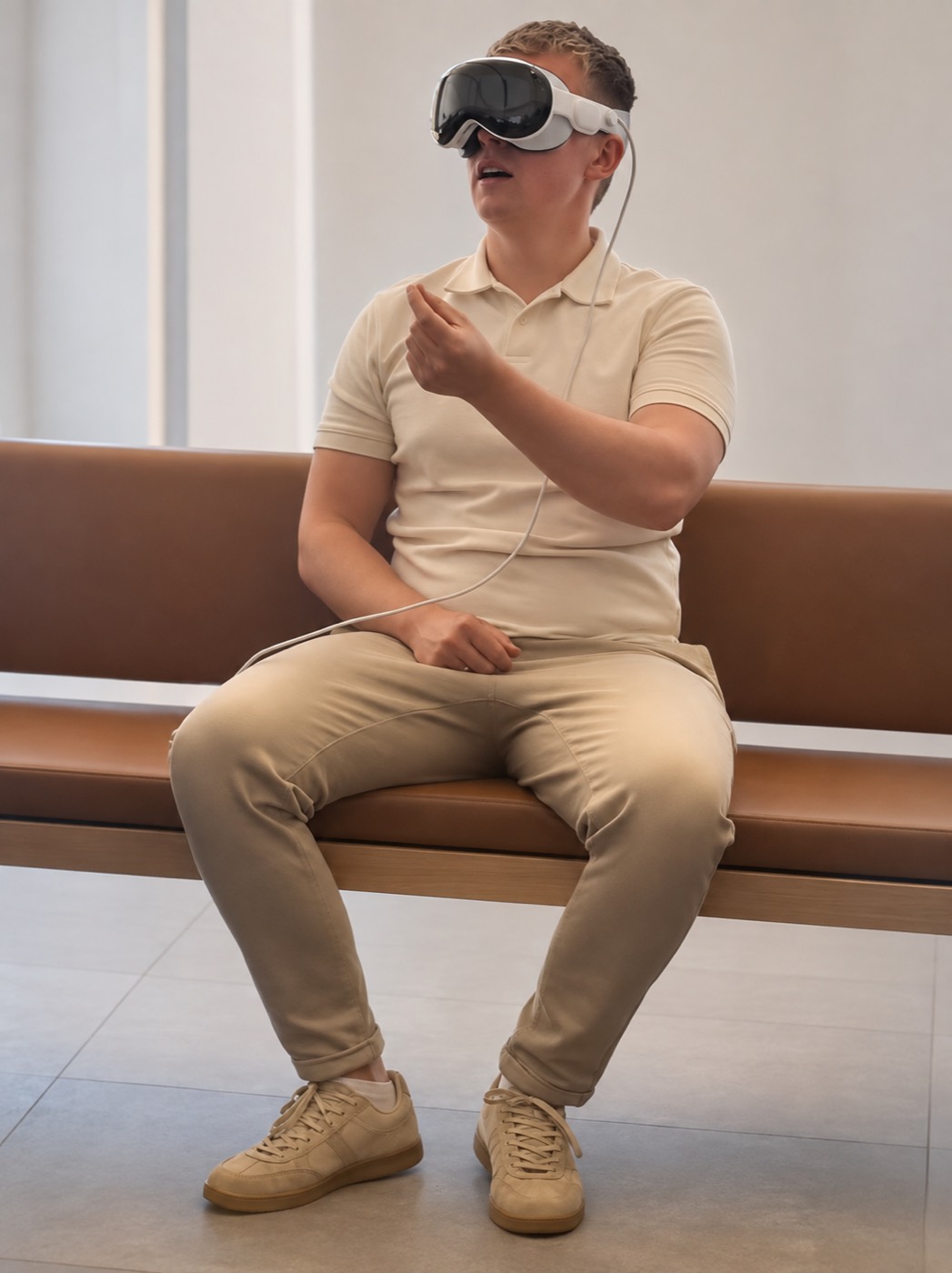
Every pipeline decision starts with the device it must run on. Lab demos are easy; mid-range phones in bad light are the job.
Proof, not claims
Six shipped projects across the intersection — each one clickable.
An animated character that teaches
A 3D tutor with voice, reasoning and Unreal Engine rendering in one real-time loop — animation as a shipped product, live in public beta.
Real-time face tracking in production
Facial landmark tracking running live — the computer-vision foundation under avatars, AR try-ons and expression-driven interfaces.
A 3D product experience, shipped
Interactive 3D built as a product feature, with the performance discipline browser 3D demands.
Six shipped projects span the pipeline: 3D characters, animation, face tracking, AR — one team, from model to production device.
Measured accuracy beats promised accuracy.
Test the idea before the budget
One 30-minute session with an engineer who has shipped this intersection: what current pipelines honestly deliver on your target devices, where the risk concentrates, and what a risk-first prototype would cost. Scoped in writing before anything starts.
If the honest answer is that the technology is not ready for your use case, you hear it on this call — with the conditions under which that changes.
Clients also buy
Video AI Agents
Digital humans and AI avatars that present, teach and sell on camera — built on real production cases.
Mobile App Development
Native iOS and Android, or cross-platform where it earns its cost — shipped to both stores by one team.
IoT & Edge AI
Connected devices with on-device intelligence — from sensors to smart power stations, hardware and cloud in one team.
Between a scan and a shipped character sits the whole pipeline — rigging, animation, rendering, product. That middle is what we sell.
The questions buyers actually ask
What accuracy can we expect from vision features?
The honest answer is measured, not promised: we build an evaluation set from your real conditions — devices, lighting, demographics — early in the project, and every accuracy claim is read off it. Benchmarks from papers do not survive contact with side light and mid-range cameras.
Unreal Engine or web-native 3D — which do we need?
Unreal for rich characters and exhibition-grade scenes; web-native (Three.js class) rendering where reach and instant loading beat fidelity. Our animated AI tutor runs Unreal; product-embedded 3D usually goes web-native. The choice is argued in writing during feasibility.
Can this run on ordinary phones?
Much of it, yes — MediaPipe-class tracking and optimised models run on-device on mid-range hardware, and we build against your actual device floor from week one. What cannot run on-device is architected honestly across device and server.
Do you do the 3D art as well as the engineering?
We deliver the full character pipeline — design, modelling, rigging, animation — with the engineering it has to survive: latency budgets, lip-sync, level-of-detail. Where a client has an art team, we integrate their assets into a production pipeline.
What did the AR work involve?
A shipped AR experience inside a US social-media SaaS app, and a commercial prototype connecting EMOTIV brain-interface hardware to AR glasses — both cases of camera-anchored content surviving real rooms and real hardware limits.
How do projects start?
With the riskiest assumption: feasibility on paper, then a prototype of the one thing most likely to kill the project, measured on real devices. Only then does the full build get scoped — it keeps budgets honest.
Seven ways to get software built well — the one-page version
The Build & Design services on one printable page: what each covers, when it is the right door, and what the first deliverable looks like. Built to be forwarded to whoever holds the budget.
From camera or character to shipped product
Book the free 30-minute session for an honest feasibility read on your idea — or describe it in two sentences and an engineer replies in one business day.
- 30 minutes, an engineer on the call
- You keep the written notes either way
- Nobody follows up more than once