

AI Business Process Automation
AI business process automation takes the work your team repeats — approvals, reconciliation, data entry, reporting — and hands it to pipelines that combine deterministic logic with LLM judgment. Two of ours in production: a finance system that cut a client’s financial staff 4×, and an ops pipeline that cut manual data entry by roughly 80% in its first month.
The free 30-minute session maps where hours and errors concentrate in your operation, and which processes automate profitably first. You keep the map either way.
From duct-tape automation to infrastructure
The Zapier stack became load-bearing
What started as one founder’s weekend hack now moves customer money and inventory. Nobody knows all the zaps, two broke silently last quarter, and the person who built them left. This is the most common starting point we see — and the clearest signal to graduate to production automation.
Growth means hiring for work with rules
Volume doubled, so the plan says double the ops team — to do work that follows written rules. Rule-following work is precisely what pipelines do without fatigue, and the business case is the salary line you do not add.
Approvals crawl through inboxes
Purchase requests, discounts, time off, refunds — each one an email thread with an audit trail made of screenshots. Automated routing with thresholds and full logs turns days into minutes and makes the auditor’s question answerable.
The month-end close eats a week
Exports, spreadsheets, cross-checks, corrections — a senior person’s week, every month, assembling numbers from systems that refuse to talk. Our finance-automation case exists because this pain compounds: the close got faster and the payroll errors stopped.

Work with rules belongs to pipelines.
What we automate
Finance and back-office processes
Payroll preparation, approvals, reconciliation, reporting — deterministic where rules exist, LLM-assisted where documents and judgment enter, human checkpoints where money moves.
You get: the process running end to end, with an audit log a controller can read.
Data flows between your systems
CRM, email, project management, ERP, spreadsheets — records moved, classified and enriched automatically, the pattern behind the −80% manual-entry number.
You get: pipelines with retries, idempotent writes and alerting when reality misbehaves.
Graduation from no-code tools
Your working Zapier/Make/n8n flows, re-founded on production infrastructure — version control, tests, monitoring — without losing what already works. n8n itself often stays, run properly.
You get: the same automations, now documented, tested and owned by your company.
LLM judgment inside the flow
Classification, extraction and drafting steps where rules run out — each with confidence thresholds and a review queue, never a model deciding on money alone.
You get: AI steps with written boundaries and visible accuracy.
How it works
Map the process honestly
We sit with the people doing the work and document how it actually flows — including the exceptions everyone handles from memory.
Automate the trunk
The 80% of volume that follows the rules goes first, with the exceptions routed to humans exactly as before.
Absorb the exceptions
The review queue shows which exceptions repeat; the repeatable ones get rules or LLM steps of their own.
Operate and extend
Monitoring, monthly reviews, the next process — automation compounds when someone owns it.

A pipeline is not a deliverable, it is a utility someone must own. Our longest client relationships are automations we still operate.
Proof, not claims
Both anchor cases are operational systems, not pilots — one has run for years.
Financial staff cut 4×, payroll errors eliminated
Automation across payroll, approvals and reporting for a client’s finance operation — errors gone, and the finance team a quarter of its former size, redeployed to work that needs judgment.
Manual data entry down ~80% in month one
300+ records a week classified, enriched and moved between CRM, email and project management by a multi-step pipeline with LLM judgment at the ambiguous steps.
The operational systems automation lives in
A brokerage ERP with workflows, role-based access and third-party integrations — the class of system our automations plug into and extend.
One finance automation eliminated payroll errors and cut the client’s financial staff four-fold — the process runs daily, years later.
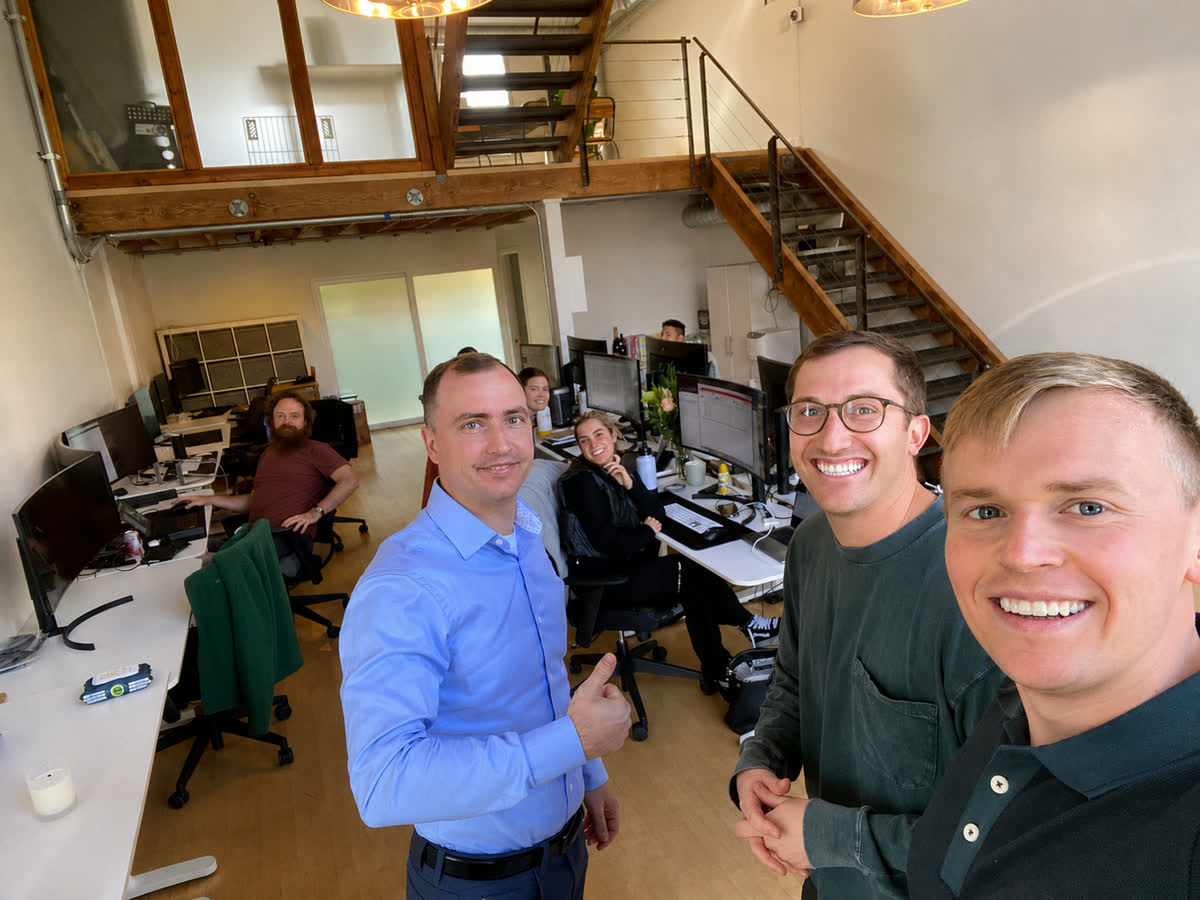
The real process is never the documented one. We map what people actually do — including the exceptions handled from memory — before automating anything.
Start where the hours concentrate
One 30-minute session maps your operation and ranks the processes by automation payback — including an honest read on what should stay manual. The first process is scoped in writing and priced before anything starts.
If your no-code stack just needs hardening rather than replacing, we say exactly that. You keep the process map either way.
Clients also buy
AI Integration
AI into your existing product and workflows this quarter — scoped as product features with usage metrics attached.
Custom ERP, CRM & Operations
Systems shaped around how your company actually runs — built, run and continuously developed for a monthly fee.
Data Engineering & AI Data Readiness
Most AI pilots die on bad data. Pipelines, models and an AI Data Readiness Audit that make yours survive.
Automate the 80% that follows rules, route the rest to humans unchanged — then let the review queue tell you what to absorb next.
The questions buyers actually ask
How is this different from hiring a Zapier consultant?
No-code tools are excellent prototypes and often stay in the stack — the difference is engineering: version control, tests, idempotent writes, monitoring, and LLM steps with review queues. We build automation your auditor can inspect and your next hire can maintain.
Where does the AI part actually help?
Where rules run out: reading documents, classifying ambiguous records, drafting responses. Deterministic logic handles everything with rules; the model handles judgment calls behind confidence thresholds; humans review the uncertain remainder. Money-moving decisions always keep a deterministic or human gate.
What happened to the people in the 4× finance case?
The routine work disappeared, the judgment work stayed and got proper attention. What the client bought was capacity: the same team size now supports a much larger operation, and payroll errors — which had a real cost — stopped.
Can you take over automations someone else built?
Yes — that is one of the most common engagements: document what exists, stabilise the fragile parts, then migrate flow by flow with the old and new running in parallel until the numbers match.
How do we know it is working after launch?
Every pipeline ships with monitoring and a weekly digest: volumes handled, exceptions routed, errors caught. The review queue makes the system’s uncertainty visible instead of silent.
What does an engagement cost?
The first process is scoped and priced in writing after the free session — deliberately sized so its payback period is measured in months. Ongoing operation and extension run on a monthly model.
What AI can actually carry in your business — the one-page version
The nine AI & Agents services on one printable page: what each one is, the situation it answers, and the first engagement that proves it. Built to be forwarded to whoever holds the budget.
Give the repeated work to a pipeline
Book the free 30-minute session and we map where hours and errors concentrate in your operation — or write two sentences about the process that eats your team’s week, and an engineer replies in one business day.
- 30 minutes, an engineer on the call
- You keep the written notes either way
- Nobody follows up more than once